
“Robot Rooms”: How Guests Use and Perceive Hotel Robots

Abstract Robot-assisted hotel services get generally high marks in a study of guests at 88 hotels in China. Guests reported making fairly frequent use of the robots, primarily for such relatively simple functions as turning on the lights and turning off the TV. Chief problems occur when the robot cannot recognize operation commands, when guests
Vietnam a Country in Transition: Health Challenges

Abstract Vietnam’s Gross National Income per capita has increased from US$110 in 2000 to US$2400 in 2018and is projected to have an urbanization rate of 40% by early 2020. So, how have these socioeconomic changes affected health issues in the country? This question is answered in the research paper titled “Vietnam a country in transition:
The Effect of Service Improvisation Competence on Hotel Performance

Abstract Purpose: The development of a service improvisation competence (Serv-IC), operationally defined as “the systemic ability of a service firm’s employees to deviate from established service delivery processes and routines to respond in a timely manner to unforeseen events using available resources” (Secchi et al. , 2019, p. 1329), has been proposed as an effective
The First Vietnamese Case of COVID-19 Acquired From China

Abstract As researchers, medical professionals, public safety officials, infectious disease professionals are working around the clock to contain the coronavirus disease 2019 (COVID-19) outbreak around the world, Dr. Le Khac Linh from VinUni is part of a team that reports the first Vietnamese case of COVID-19 acquired from Wuhan – China, and describes the identification,
FDM-Based 3D Printing of Polymer and Associated Composite
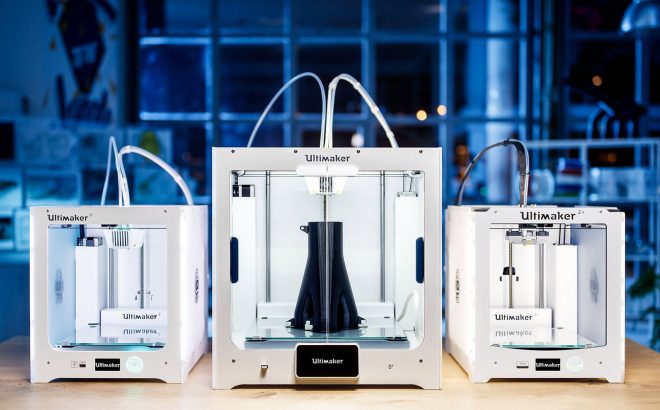
Abstract Fused deposition modelling (FDM) is one of the fastest-growing additive manufacturing methods used in printing fibre-reinforced composites (FRC). The performances of the resulting printed parts are limited compared to those by other manufacturing methods due to their inherent defects. Hence, the effort to develop treatment methods to overcome these drawbacks has accelerated during the
Blockchain and Edge Computing for Federated Learning

Abstract Federated Learning (FL) is a recent direction in Machine Learning. Whereas standard learning approaches require centralizing all the training data on one machine, FL enables training with decentralized data privately stored across many machines. This is important because in practice data may be too big to send to the central server or too sensitive
3D imaging of cells and tissues using polarized light microscopy
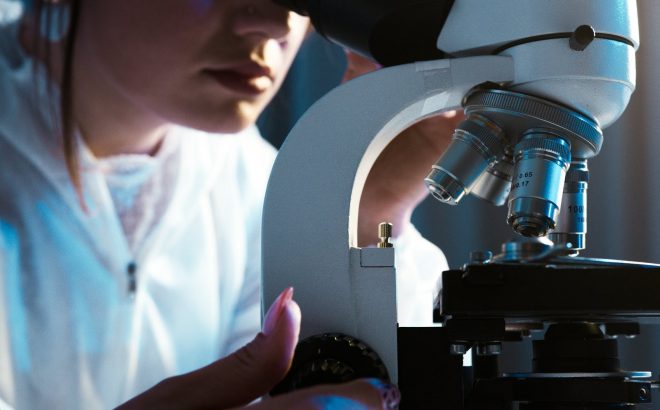
Abstract While polarized light and polarized fluorescence imaging are widely used as imaging tools in biological studies, it is still impossible to reveal the full, 3-dimensional anisotropy using available imaging techniques. To overcome this problem, the Oldenbourg lab at Marine Biological Laboratory, Woods Hole, MA, USA, first developed the Light Field LC-PolScope, which combines the
Enabling an End-to-End QoS Framework for Live 360-Degree-Video Streaming
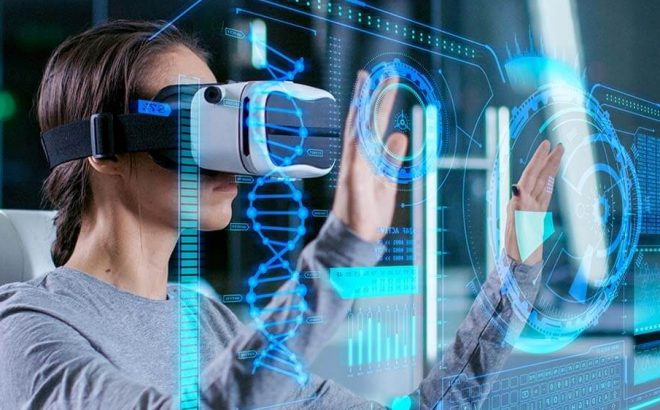
Abstract Virtual reality and augmented reality have been introduced to many applications such as virtual society, virtual travel, virtual classroom, virtual laboratory… with a promising high growth rate as well as wide application potential in the future. The VR technology can change drastically the way customers experience a virtual classroom or meeting where online participants
Non-Shannonian Inference Procedure and Thermostatistics

Abstract Power-law distributions or more generally non-exponential distributions are ubiquitous in nature and observed in many diverse scientific disciplines, indicating a high degree of complexity and self-organization of the system under scrutiny. The entropic understanding of these distributions is one possible approach which combines Statistical Thermodynamics and Information Theory by virtue of the inference procedure
Design and Fabrication of a Hybrid 3D Bioprinter
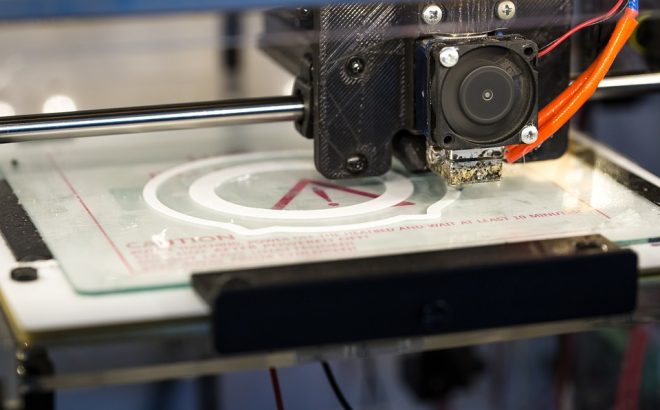
Abstract 3D bioprinting is a newly developed technology to fabricate artificial tissues and organs through additive manufacturing of living cells into a 3D tissue structure layer by layer. In this project, Dr. Truong and his collaborators are developing a hybrid 3D system of which one head is dedicated for printing complex scaffold structures from various